Minimize Waste on Job Sites to 1 Percent with DaVinci
There are several ways to minimize waste for the different DaVinci roofing products. Contractors interested in achieving minimal waste should ask themselves a few questions about their roofing crew. Try these on for size.
Can the roofing installers be counted on to be careful and save material where they can?
If the answer is “yes,” your team is already on the right track to minimizing waste. Efficiently using every piece of material can significantly reduce overage. Encouraging your installers to carefully handle all materials is crucial for this.
If they cut a tile for a valley, will they use the remnant on the corresponding hip?
Proper planning and precision during installation can mean being able to use the remnants. Teaching your team to use leftover pieces can save material and money, thus reducing waste.
On multi-width installation, will your crew measure for the correct tile on the gable end, or will they cut the tile and throw away the rest?
Accurate measurements are vital. By measuring correctly, your team can avoid unnecessary cuts and waste. This practice also offers a professional finish to your composite roofing project.
On single-width installation, will they use the cutoff portion from the right side of a gable on the left?
Using every piece of material is vital in single-width installations. By reusing cutoff portions, they can reduce waste even further.
If you answer “yes” to all these questions, then you and your team can install DaVinci Multi-Width Slate and Multi-Width Shake with less than one percent waste to reduce overage. That’s unless there are valleys in the roof, which don’t have corresponding hips. In that case, there is one square of waste for every 100 linear feet of valley (that counts both sides of the valley). You can install Single-Width Slate and Single-Width Shake with less than two percent waste, following the same stipulation as above.
Install DaVinci Tiles and Minimize Waste
DaVinci’s Tech Team frequently says that “there is no waste on a hip roof.” They also share that you need one square for every 100 feet of valley on a gable roof when using DaVinci multi-width products. Being able to minimize waste when installing DaVinci composite tiles is a huge competitive advantage. Especially when compared with other steep slope systems where 10 percent or more waste factor is common.
Looking for another way to reduce overage? You’ll find it when cutting tiles for valleys.
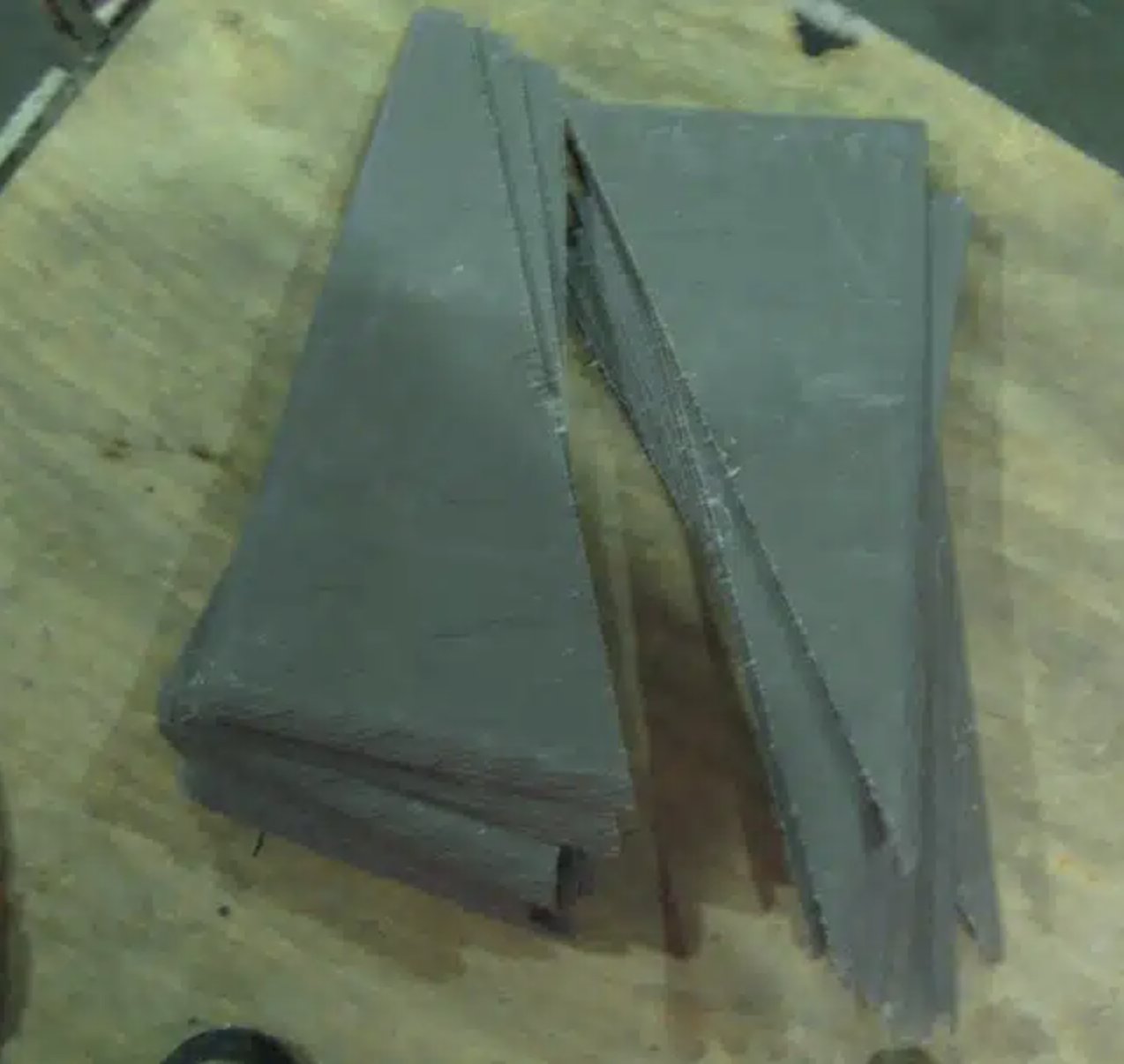
Look for the correct angle and cut all your tiles with a circular saw. Then use all the valley cuts shown on the right in your valleys. The leftover cuts provide the perfect angle to finish the hips. Not only does this save material, but it also saves time.
Environmental and Cost Benefits of Minimizing Waste
Limiting waste saves on material costs and is also beneficial for the environment. Reducing overage means less waste ending up in landfills. This is a crucial step toward sustainable building practices.
Less waste also translates to fewer trips to dispose of materials, saving on fuel and reducing your carbon footprint. Environmentally conscious clients increasingly prefer contractors who prioritize sustainability. Using DaVinci products can help enhance your reputation as a responsible and forward-thinking professional in the roofing industry.
Grow Your Knowledge with DaVinci
Want to get more installation tips specific to DaVinci products? Visit our website. Elevate your projects with the quality and precision associated with the DaVinci name.
This blog was originally posted in 2013.